
Storytelling has never been mere entertainment; it is an emotional rehearsal for real life. When children read about an obstacle overcome with patience rather than anger, they store that blueprint for the playground, the classroom, and their own quiet struggles.
Why Moral Stories for Children Matter in a Digital Age
Children today navigate complex social dynamics earlier and faster than previous generations. They encounter performance pressure, playground cliques, and the subtle sting of comparison. Lecturing a child on emotional balance rarely works—defenses shoot up, or the abstract advice simply floats away.
Well-crafted moral stories for children bypass those defenses naturally. A narrative acts as a gentle, non-judgmental mirror. Rather than feeling scrutinized, a child observes an endearing character wrestling with jealousy, fear, or a bruised ego.
- Emotional validation: Children realize that self-doubt, anger, and worry are normal human feelings, not personal defects.
- Vicarious problem-solving: Watching a protagonist pause, reflect, and choose kindness provides a practical roadmap for everyday decisions.
- Imaginative calm: Black-and-white visuals and deliberate prose slow the child’s heart rate, fostering reflection away from dopamine-heavy screens.
When enduring values are embedded within relatable dilemmas, the takeaway sticks because the child discovered the truth alongside the protagonist. If your family already enjoys reading together to spark joy and connection—much like exploring inspiring stories for kids—adding reflective tales rounds out a child’s emotional toolkit.
Bringing Timeless Wisdom to Everyday Playground Struggles
The most effective allegories bridge ancient wisdom and contemporary childhood challenges. Rooting tales in enduring cultural traditions—such as the wit, gentle humor, and quiet brilliance of Lord Ganesha—gives children a grounding sense of comfort. Ganesha is not just the remover of obstacles; he symbolizes mindful listening, quick wit over brute force, and deep humility.
These classic qualities address everyday growing pains cleanly:
- Navigating social anxiety: Instead of shrinking from the spotlight, children learn to center themselves and lean on inner self-worth rather than external praise.
- Managing competitive envy: When a peer wins, stories teach children how to transform jealousy into celebration, protecting their inner peace.
- Embracing mistakes: Children discover that an error is never an identity, but simply the starting line of a better idea.
Parents often struggle to articulate these big concepts during chaotic, emotionally charged moments. A thoughtful narrative does the heavy lifting, opening avenues for genuine conversation during quiet evening routines.
How to Choose Transformative Moral Stories for Children
Not all moral tales are created equal. Heavy-handed fables that rely on punitive consequences or shame often alienate young readers. The goal is always to build resilience, not fearful compliance.
When selecting moral stories for children, prioritize narratives that balance three elements:
- Relatable conflict: The problem must feel authentic to a five-to-ten-year-old, whether it is a broken toy, feeling excluded, or the dread of speaking up in class.
- Actionable emotional tools: The story should show practical steps—like taking a deep breath, reframing a thought, or admitting a mistake—rather than relying on magical shortcuts.
- Space for imagination: Overly saturated artwork can overwhelm the senses. Expressive, sketch-style illustrations invite children to participate actively in the scene with their own minds.
A story that leads a child to whisper, “I felt just like that yesterday,” does more for their character than a dozen lectures on good behavior ever could.
Frequently Asked Questions
At what age should I introduce moral stories to my child?
Children as young as five thrive with narrative-driven life lessons. At this developmental stage, they begin interacting with broader social circles at school, making it the ideal window to explore empathy, fairness, and emotional self-regulation through relatable characters.
How do I discuss a story’s message without sounding preachy?
Ask open-ended, non-judgmental questions rather than declaring the moral. Try asking, “Why do you think the character chose to share?” or “What would you have done in that situation?” Let your child lead the reflection and arrive at their own realizations.
Can character-building stories help reduce screen time?
Yes. Children frequently reach for screens out of boredom or sensory habit. Engaging, reflective storybooks capture their imagination, lower nervous system overstimulation, and create a calming, screen-free reading routine.
Begin the Journey of Heart and Mind
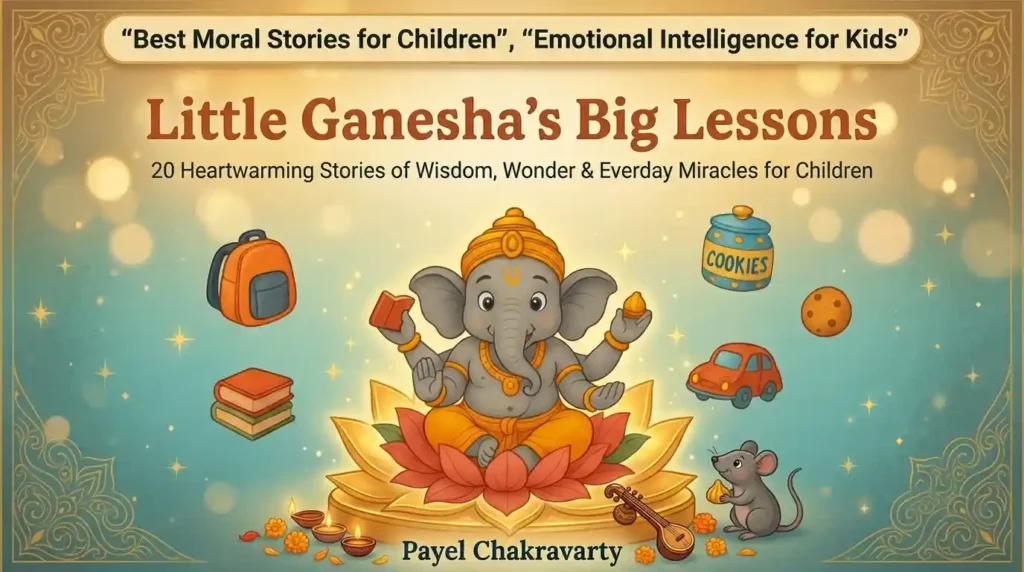
Raising thoughtful, courageous children in a distracted world requires intentional choices. If you are seeking stories that nurture kindness, emotional balance, and quiet confidence, explore Little Ganesha’s Big Lessons: 20 Magical Moral Stories That Shape Children’s Hearts and Minds by Payel Chakravarty. It is a gentle companion for your bedtime routine, offering 20 illustrated tales that guide young readers through life’s everyday hurdles with wisdom, patience, and a smile.
