
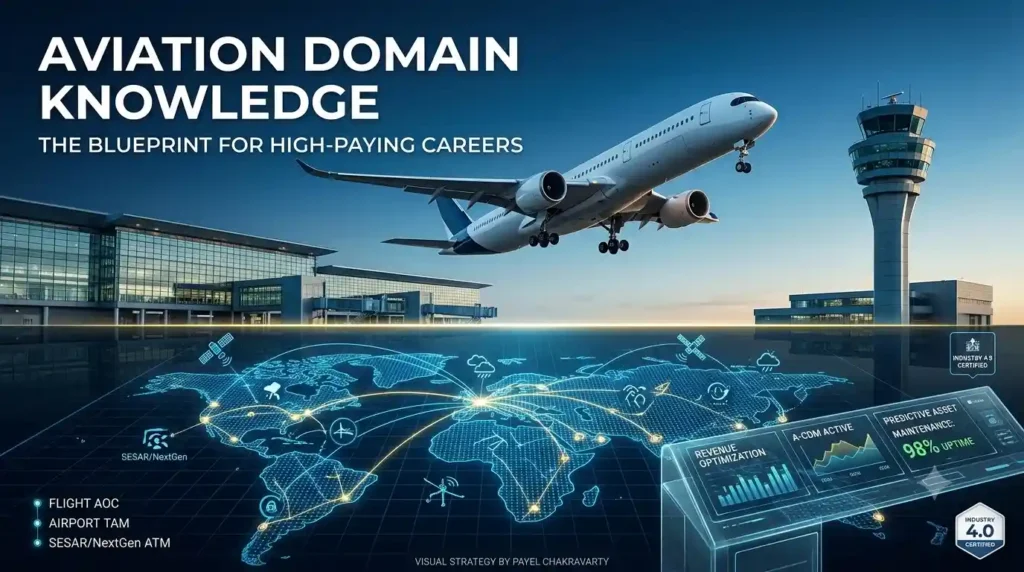
Aviation is an exacting discipline where legacy infrastructure, razor-thin profit margins, and zero-tolerance safety mandates intersect. Developing comprehensive domain expertise distinguishes visionary contributors from interchangeable specialists.
Why Modern Enterprises Demand Deep Aviation Domain Knowledge
Aviation organizations do not operate like conventional SaaS startups or consumer supply networks. They manage high-value assets governed by international treaties, strict labor agreements, and extreme meteorological variability.
When enterprise engineering and consulting teams build tools without operational context, their initiatives collapse. Designing effective platforms requires understanding how variables interconnect across the aviation ecosystem:
- Regulatory Governance: ICAO conventions and IATA standards regulate border operations, passenger data protection, and baggage handling protocols.
- Network Fragility: A sudden convective weather ground stop at Chicago O’Hare triggers crew rest expirations across European arrival hubs within hours.
- Capital Allocation: Aircraft lease covenants, scheduled airframe overhauls, and engine shop visit reserves demand hyper-accurate lifecycle analytics.
Without practical aviation domain knowledge, professionals often misdiagnose core systemic bottlenecks that ground operations teams resolve on a daily basis.
Core Pillars of Aviation Domain Knowledge
Navigating aerospace operations demands a holistic grasp of the end-to-end journey. Operational excellence occurs where airline command hubs, airport infrastructure, and airspace corridors align.
1. Airline Operational Control Centers (AOC)
Airlines continuously balance commercial revenue optimization with absolute operational safety. High-impact practitioners master dispatch coordination, slot compliance, irregular operations (IROPS) recovery, and crew flight-time duty limitations.
2. Intelligent Airport Infrastructure
Airports function as high-throughput, data-driven cities. Essential competencies include Airport Collaborative Decision Making (A-CDM), baggage handling automation (BHS), and contactless biometric passenger processing modeled after benchmarks like Singapore Changi.
3. Next-Generation Air Traffic Management (ATM)
Global airspace is undergoing fundamental modernization via SESAR in Europe and NextGen in North America. These programs replace legacy ground-based radar surveillance with dynamic, trajectory-based routing that reduces fuel consumption and curbs en-route delays.
Emerging Technologies Transforming Aviation Domain Knowledge
Rapid digital acceleration is reshaping commercial aerospace. Traditional flight dispatch engines are converging with real-time predictive analytics, alternative propulsion systems, and automated airspace control.
- Sustainable Aviation Fuel (SAF) Accounting: Establishing book-and-claim registries and carbon audit trails across decentralized fuel bunkering points.
- Urban Air Mobility (UAM): Creating low-altitude digital traffic corridors to safely integrate electric vertical takeoff and landing (eVTOL) aircraft alongside mainline commercial routes.
- Predictive Telemetry & Maintenance: Processing multi-gigabyte IoT data streams directly from modern turbofans to catch component wear before unscheduled groundings occur.
Professionals capable of evaluating advanced technologies against complex operational guardrails command high value across aerospace consulting, enterprise IT, and airline leadership. For insights into developing early curiosity and creative thinking, explore our feature on inspiring stories for kids.
Frequently Asked Questions
What is aviation domain knowledge?
It is the end-to-end understanding of how airlines, airports, air traffic service providers, and global regulatory bodies collaborate. It encompasses flight operations, revenue management, international compliance, and enterprise aviation IT systems.
Can tech and consulting professionals transition into aviation roles?
Yes. Global carriers and technology partners actively hire software engineers, data scientists, and project managers. However, standing out in interviews and executive briefings requires fluent mastery of aviation terminology, turnaround mechanics, and operational frameworks.
What role do NextGen and SESAR play in airspace management?
SESAR (Europe) and NextGen (United States) are airspace modernization initiatives. They shift air traffic control from legacy ground radar to satellite-driven navigation, automated trajectory tracking, and real-time digital coordination.
Accelerate Your Aviation Career
Transitioning into high-level aerospace roles requires structured, authoritative insight rather than disconnected research. If you are preparing to lead digital aviation programs, transition from general consulting, or manage airline enterprise platforms, Payel Chakravarty’s Aviation Domain Knowledge for Professionals: Airlines, Airports, Air Traffic, and Emerging Technologies Explained delivers the essential blueprint.
Spanning 14 strategic chapters, real-world case studies from Lufthansa to Changi, and practical project frameworks, this guide gives you the confidence to command boardrooms and operational control centers worldwide.
