
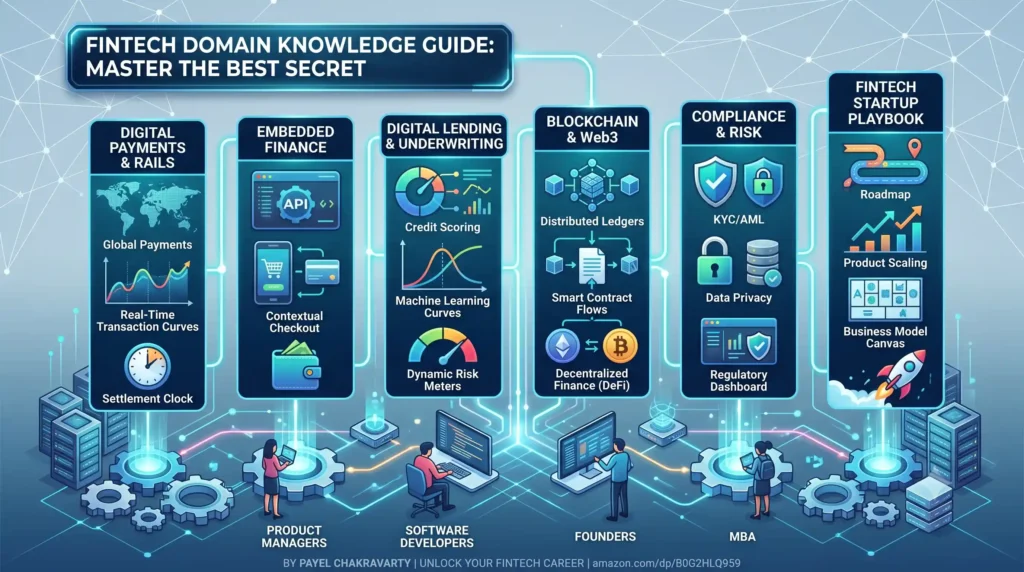
Building modern financial software is rarely just an engineering puzzle. In reality, teams must decode the invisible architecture of money. Therefore, without a structured fintech domain knowledge guide, developers and founders face costly platform outages, compliance bottlenecks, and fractured documentation.
Consumer interfaces look effortless on glass. However, moving real money requires a deep understanding of core clearing networks and multi-currency ledgers. In fact, just as we explored the foundational role of underwriting systems in our overview of insurance domain knowledge for tech careers, building financial platforms demands operational mastery. Consequently, technical execution fails without domain expertise.
Below is how high-growth teams bridge the gap between disruptive product ideas and resilient financial infrastructure.
Fintech Domain Knowledge Guide to Payment Rails & Infrastructure
Before deploying an API endpoint, teams must understand how money moves across borders and ledgers. Specifically, three foundational rails power modern financial technology.
1. Payments and Clearing Cycles
Card swipes appear instantaneous. However, transactions split into authorization, clearing, and settlement behind the scenes.
- Authorization: Messaging networks verify available funds and place real-time holds within milliseconds.
- Settlement: Actual funds settle across central bank rails over specific batch windows. As a result, platforms must manage liquidity risk proactively.
2. Embedded Finance & Banking-as-a-Service
Modern software platforms now distribute banking services natively. Consequently, companies use modular APIs to unlock high-margin financial products.
- Contextual Lending: Platforms embed Buy Now, Pay Later tools directly at checkout.
- Virtual Card Issuance: Businesses issue programmatic debit cards for on-demand contractor payouts.
3. Algorithmic Underwriting and Credit Models
Traditional credit scores rely strictly on historical repayment records. Modern digital lending models, however, analyze live transaction data and business cash flows.
- Dynamic Scoring: Machine learning pipelines evaluate revenue health in seconds.
- Automated Servicing: Pre-authorized recurring mandates streamline collections while ensuring regulatory adherence.
Watch: A quick visual breakdown of essential concepts in modern financial technology architecture.
Why Every Builder Needs This Fintech Domain Knowledge Guide
Entering the financial technology sector without domain clarity creates significant product risk. After all, unlike standard consumer apps, fintech platforms carry severe legal liabilities. For example, a minor data reporting bug can trigger immediate regulatory scrutiny.
A reliable fintech domain knowledge guide protects teams from three common pitfalls:
- The Compliance Blindspot: Treating KYC and AML rules as secondary features rather than architectural constraints.
- Ledger Reconciliation Failure: Skipping double-entry accounting at the database level, which creates balance discrepancies.
- Licensing Misalignments: Developing product features that violate regional banking rules, forcing expensive code rewrites.
Therefore, engineers and product managers who master domain concepts earn the trust of partner banks and compliance officers.
Applying the Fintech Domain Knowledge Guide to Real-World Architecture
Teams must convert theoretical knowledge into repeatable technical execution. Consequently, structuring your system correctly ensures that compliance and user experience scale together.
Key Architectural Principles
- Enforce Double-Entry Ledgers: Record every transaction as equal debit and credit entries. Never use single-entry balances.
- Isolate Regulatory Microservices: Decouple verification checks behind internal APIs. Hence, you can swap verification vendors without disrupting core flows.
- Document Clearing Windows: Map bank settlement schedules to avoid cash flow bottlenecks during holiday processing pauses.
- Protect Customer Data: Encrypt financial records in transit and at rest to meet stringent institutional audits.
Ultimately, true domain mastery requires an end-to-end blueprint covering payments, credit, compliance, and decentralized finance.
Frequently Asked Questions: Fintech Domain Knowledge Guide
What constitutes core domain knowledge in financial technology?
It includes payment rails, regulatory frameworks, credit risk analysis, and double-entry accounting. Together, these concepts define how software moves value safely.
Why is domain expertise critical for product managers?
Fintech product managers make operational decisions that affect compliance and capital reserves. Therefore, deep domain insight prevents illegal workflows and costly payment disputes.
How does embedded finance differ from traditional banking integrations?
Traditional integrations rely on batch files and manual verification. Conversely, embedded finance leverages real-time APIs to inject banking services directly into non-financial applications.
Accelerate Your Financial Technology Career
The tech industry consistently rewards professionals who combine software craftsmanship with specialized domain expertise. When you understand foundational financial rails, you can negotiate banking partnerships and build durable applications with confidence.
If you want to bypass fragmented blogs and gain a comprehensive roadmap, consult this definitive fintech domain knowledge guide: Fintech Domain Knowledge: From Disruption to Innovation by Payel Chakravarty.
This handbook is available in Kindle, Paperback, and Hardcover editions. Furthermore, it provides detailed payment architectures, credit risk workflows, interview preparation frameworks, and compliance checklists for builders worldwide.
