
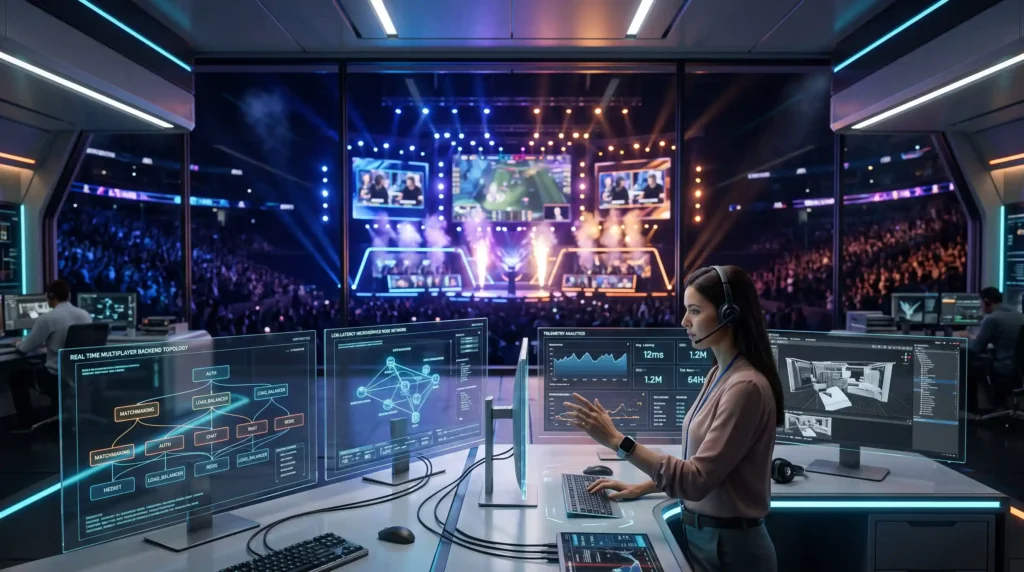
For example, mastering complex regulatory requirements is vital when building an insurance domain knowledge tech career. In the same way, breaking into entertainment software requires learning an entirely distinct vocabulary. Job listings frequently ask for live-ops telemetry familiarity, tick-rate optimization, or battle pass unit economics. Consequently, bridging this specific knowledge gap transforms an applicant from an industry outsider into an indispensable asset.
Why Gaming and Esports Domain Knowledge Is Your Ultimate Advantage
Recruiters and engineering directors review countless resumes featuring solid full-stack development or generic product management backgrounds. However, the candidates who actually win the offer are those who speak the native language of game production without needing months of onboarding.
Developing true gaming and esports domain knowledge enables you to connect architectural decisions directly to player retention and financial viability. For instance, whether discussing client-side prediction in high-cadence first-person shooters or player lifecycle modeling in mobile titles, domain intelligence elevates your professional credibility. Furthermore, it reassures hiring managers that you understand studio cadence.
- Contextual Problem-Solving: Translate high-level business goals directly into engine-level constraints, matchmaking protocols, and server mesh requirements.
- Flawless Technical Communication: Confidently articulate concepts like deterministic lockstep, authoritative servers, and latency mitigation during architectural design interviews.
- Cross-Functional Empathy: Bridge the operational divide between creative directors, narrative designers, data scientists, and monetization strategists.
Deconstructing the Modern Gaming Tech Stack & Architecture
Modern titles rely on sophisticated distributed systems engineered to handle millions of concurrent connections while sustaining razor-thin latency budgets. Therefore, building proficiency across these layers is critical for any technical lead, producer, or systems architect.
[ Client Engines (Unreal / Unity / Godot) ]
                    │
          [ Low-Latency Gateway ]
                    │
      ┌─────────────┴─────────────┐
      ▼                           ▼
[ Dedicated Game Servers ]   [ Live-Ops Microservices ]
  • Tick-Rate Simulation       • Player Profile & Inventory
  • Spatial Partitioning       • Matchmaking & MMR
  • Lag Compensation           • Telemetry & Anti-Cheat
1. Game Engines and Runtime Mechanics
A production pipeline begins with the underlying runtime engine. Specifically, studios choose engines based on target hardware and fidelity:
- Unreal Engine: Predominantly chosen for high-fidelity PC and console titles utilizing Nanite geometry virtualization, Lumen dynamic lighting, and C++ gameplay systems.
- Unity: The industry standard for mobile, multi-platform releases, and rapid prototyping via C# scripting.
- Godot & Custom Engines: Increasingly adopted by independent teams and studios requiring lightweight footprint optimization and unencumbered licensing models.
2. Backend Infrastructure and Real-Time Networking
In addition, architecting multiplayer infrastructure involves distinct networking models tailored to genre-specific demands:
- Deterministic Lockstep: Traditional for RTS and fighting games, ensuring identical inputs execute in sync across clients.
- Client-Server with Snapshot Interpolation: Crucial for competitive titles to enforce state authority on the server and eliminate client-side manipulation.
- Latency Compensation & Client Prediction: Rendering instantaneous feedback on the local client while reconciling discrepant states with the central server tick.
Video Briefing: Breaking into the Gaming Ecosystem
To quickly digest the scope of foundational competencies hiring managers prioritize, watch this executive overview outlining the industry transition path:
Business Models, Live-Ops, and Player Telemetry
The modern industry functions primarily around Games-as-a-Service (GaaS). Because revenue depends on sustained engagement rather than one-time box sales, developing robust gaming and esports domain knowledge requires understanding how live-ops teams monitor health metrics and deploy content iterations post-launch.
| Core Metric / System | Operational Function | Business Impact |
|---|---|---|
| DAU / MAU Ratio | Tracks stickiness by measuring daily vs. monthly active users. | Indicates player engagement depth and platform health. |
| ARPU & ARPPU | Averages revenue per active user and per paying user. | Benchmarks pricing efficiency and microtransaction appeal. |
| Telemetry Ingestion | Captures real-time crash logs, economy transfers, and combat events. | Informs game balancing, patch cycles, and fraud detection. |
| Battle Pass Architecture | Tiered progression rewarding engagement through cosmetic incentives. | Drives consistent recurring revenue without pay-to-win friction. |
Designing Balanced Live-Ops Cadences
Successful live operations balance server stability, game balance, and fresh narrative content. As a result, product teams rely on disciplined release cadences:
- Event Scheduling: Synchronizing limited-time events with regional holidays to maximize concurrency peaks.
- Dynamic Economy Balancing: Running real-time simulations to prevent hyper-inflation of secondary virtual currencies.
- A/B Testing Pipelines: Deploying segmented UI or store variations to isolate drop-off points before global deployment.
Bridging Traditional Production to Web3, AI, and Esports
The coming decade belongs to teams that harmonize classical engineering discipline with emerging paradigms. Consequently, understanding these intersections ensures long-term career resilience.
Generative AI and Dynamic Workflows
Currently, studio pipelines utilize machine learning models for procedural terrain generation, adaptive non-player character (NPC) behavioral trees, and dynamic automated localization. In effect, these tools substantially lower pre-production friction.
Tournament Infrastructure and Broadcast Technology
Meanwhile, esports ecosystems operate as specialized media entities. Because competitive integrity is paramount, technical teams must handle:
- Observer Tools & Virtual Cameras: Real-time software rigs delivering automated replay perspectives for broadcast feeds.
- Tournament Tiering & Licensure: Navigating open-bracket qualifiers, franchised leagues, and compliance frameworks across regional publisher agreements.
Frequently Asked Questions
Can I transition into gaming from enterprise IT without prior game development experience?
Yes, absolutely. Studios actively recruit business analysts, cloud architects, QA automation engineers, and scrum masters from enterprise IT. However, the primary hurdle is rarely your core technical competency. Instead, it is your ability to apply those skills within game production methodologies and live-service constraints.
What is the most critical difference between enterprise software and game backends?
Enterprise software traditionally prioritizes strict transactional ACID compliance and high throughput over strict real-time deadlines. In contrast, multiplayer game backends prioritize low-latency UDP packet delivery, high-frequency tick simulations (typically 30–128 Hz), and active lag compensation algorithms.
How do product management roles differ in gaming?
Product Managers in gaming focus intensely on behavioral psychology, virtual economy health, engagement loops, and live-ops event cadences rather than standard corporate feature delivery. Therefore, success is measured by retention curves, cohort churn, and session lengths.
Accelerating Your Professional Path
Navigating the nuances of studio hierarchies, engine architecture, and live-service operations no longer requires years of unguided trial and error. Because having a structured roadmap makes all the difference, you can fast-track your preparation with an end-to-end industry blueprint.
For an exhaustive, step-by-step technical guide covering studio operations, system-design frameworks, and interview prep, read Gaming & Esports Domain Knowledge Mastery: Complete Professional’s Guide by Payel Chakravarty.
