
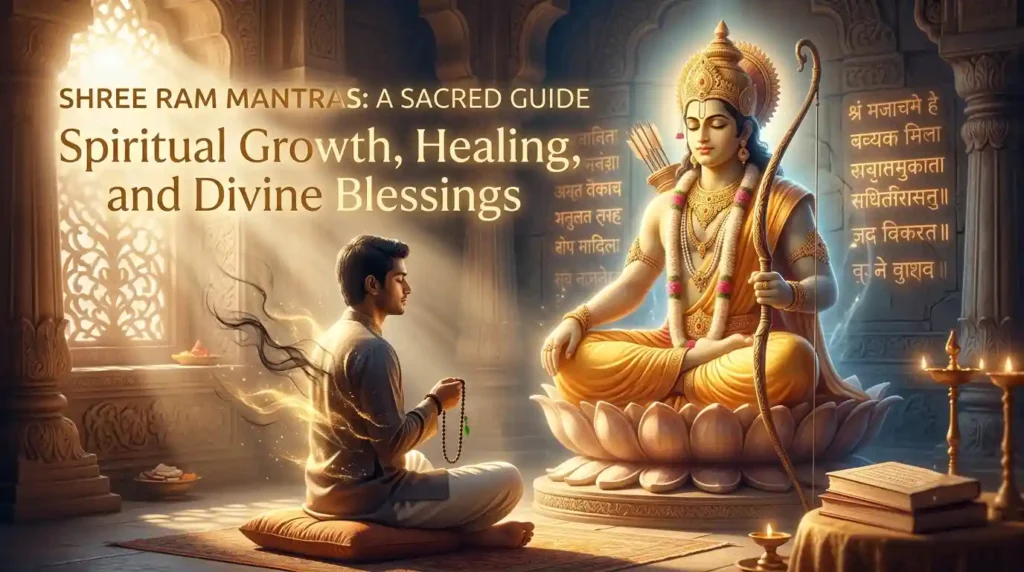
Historically revered as the archetype of Maryada Purushottama (the embodiment of righteousness, composure, and ethical perfection), Shree Ram represents steadiness in the center of crisis. When we speak of Shree Ram Mantras, we are not invoking rigid dogmas or complex ascetic demands. Instead, we call upon a grounded, living current of tranquility that fits cleanly into a working professional’s morning, an elder’s evening, or a family’s daily gathering.
The Sacred Science Behind Shree Ram Mantras
Mantras function far beyond emotional sentiment or cultural folklore. At a foundational psycho-acoustic level, repetitive sound patterns alter neural activity, shifting the autonomic nervous system from sympathetic fight-or-flight reactivity into parasympathetic equilibrium. When chanting, the tongue’s subtle contact with the upper palate stimulates reflex points connected to the hypothalamus, gradually dissolving internal agitation.
Much like the transformative focus cultivated through a dedicated Krishna mantra for success, centering the mind on divine sound anchors our scattered thoughts toward higher purpose and clarity.
In authentic Vedic and Bhakti lineages, Ram Naam is revered as a Taraka Mantra—a sonic bridge capable of carrying consciousness across the turbulent waters of worldly anxiety. It operates across three distinct levels of experience:
- Psychological Restructuring: It interrupts chronic rumination, breaking repetitive loops of worry, guilt, and future-oriented panic.
- Energetic Balancing: The seed syllable “Ra” activates vital energy (prana) at the solar plexus, while “Ma” brings soothing, cooling lunar containment at the heart.
- Spiritual Grounding: By aligning awareness with the vibration of Shree Ram, individual consciousness connects with unwavering moral clarity, resilience, and compassion.
Why Ram Naam Is the Simplest Sadhana in Kali Yuga
Classical scriptures emphasize that complex, multi-day fire ceremonies and severe physical austerities belonged to earlier ages. For the fast-paced modern era (Kali Yuga), sacred texts point toward one universally accessible path: sincere remembrance through sacred sound.
You do not need to renounce your family, abandon professional duties, or retreat to a cave. Whether managing financial decisions, navigating health concerns, or restoring family harmony, continuous recitation of Shree Ram Mantras integrates spiritual progress directly into householder responsibilities.
Core Chanting Protocols: Posture, Focus, and Pronunciation
Approaching sacred vibration with conscious structure amplifies its grounding effects. While divine names remain benevolent under all conditions, mindful alignment enriches your inner reception.
- Sacred Time & Space: The pre-dawn hours (Brahma Muhurta, roughly 4:00 AM to 6:00 AM) or dusk (Sandhya) offer naturally settled energetic conditions. Choose a quiet corner free from active distractions.
- Body Alignment: Sit with the spine upright yet relaxed, either on a cushion on the floor or in an upright chair. Physical stability encourages mental stillness.
- Breath Coordination: Inhale smoothly; vocalize the mantra on an unforced, sustained exhalation. Allow natural pauses without muscular tension.
- Levels of Recitation:
- Vaikhari (Audible): Reciting aloud to settle scattered thoughts and establish energetic boundaries.
- Upamshu (Whispered): Moving only the lips; deepens internal sensory withdrawal.
- Manasika (Mental): Silent inner repetition within heart or mind—the most concentrated stage of japa.
Essential Shree Ram Mantras for Daily Transformation
Each traditional mantra carries a specific frequency tailored to particular inner challenges. Select one primary formulation to work with consistently rather than alternating constantly between many:
| Mantra Intent | Sanskrit Recitation | Primary Benefit |
|---|---|---|
| Universal Balance & Peace | Shree Ram, Jai Ram, Jai Jai Ram | Neutralizes acute mental restlessness, clears environmental negativity, and centers emotions. |
| Primal Protection & Energy | Om Ramaya Namaha | Deepens connection to the divine lineage, cultivating courage and resolving chronic worry. |
| Surrender & Transcendence | Om Namo Bhagavate Ramachandraya | Dissolves rigid ego barriers, fosters radical acceptance, and relieves emotional burnout. |
| Courage & Protective Action | Hanuman Chalisa (Opening Verses) | Direct extension of Ram Bhakti; instills unwavering resolve, vitality, and fearless clarity. |
Building a Realistic Daily Sadhana Routine
A sustainable spiritual discipline adapts smoothly to demanding schedules instead of demanding unsustainable lifestyle upheavals.
- Morning Foundation (10–15 Minutes):
- Begin with three steady, grounding breaths.
- Chant one round (108 repetitions) of Shree Ram, Jai Ram, Jai Jai Ram using a Tulsi or Rudraksha mala.
- Sit in absolute stillness for 2 minutes, resting attention in the lingering acoustic silence.
- Mid-Day Anchors (1–2 Minutes):
- Step back from digital screens during work breaks.
- Inwardly repeat Ram Naam 11 times to reset your nervous system baseline before stressful tasks or meetings.
- Evening Closure (10 Minutes):
- Reflect on your day’s actions through the lens of ethical clarity (dharma).
- Recite the Hanuman Chalisa or practice quiet, breath-synchronized mental japa prior to sleep to ease subconscious tension.
Frequently Asked Questions
Do I need initiation (Diksha) to chant Shree Ram Mantras?
No. Devotional chants and holy names of Shree Ram—such as the sacred Taraka Mantra (Shree Ram, Jai Ram, Jai Jai Ram)—are universal. They are open to all individuals regardless of background, gender, or formal initiation. Sincere reverence and consistent practice are the only prerequisites.
What should I do if my mind wanders constantly during japa?
Wandering thoughts are entirely natural, especially during the initial stages of practice. Rather than fighting distractions with frustration, gently observe the thoughts and steer your awareness back to the acoustic vibration of the words. Transitioning from mental recitation to audible chanting often helps anchor attention quickly.
How long does it take to experience tangible results?
While noticeable nervous system relaxation can occur within a single focused 15-minute sitting, cumulative shifts in emotional composure, reduced reactivity, and clearer decision-making typically emerge after 21 to 40 consecutive days of dedicated daily practice.
Cultivating Lasting Inner Composure
Genuine spiritual transformation does not require escaping real-world obligations. The sacred vibrations of Shree Ram offer an enduring compass—teaching us to remain composed amid grief, ethical amid compromise, and profoundly peaceful in the face of uncertainty.
If you are ready to move beyond scattered devotional practices and establish a grounded, life-affirming spiritual anchor, explore Payel Chakravarty’s comprehensive guide, Shree Ram Mantras: A Sacred Guide to Spiritual Growth, Healing, and Divine Blessings. Featuring a structured 21-day transformation system, practical 108-chant tracking sheets, and a fear-free approach to japa, it serves as a steady companion on your path to lasting balance.
